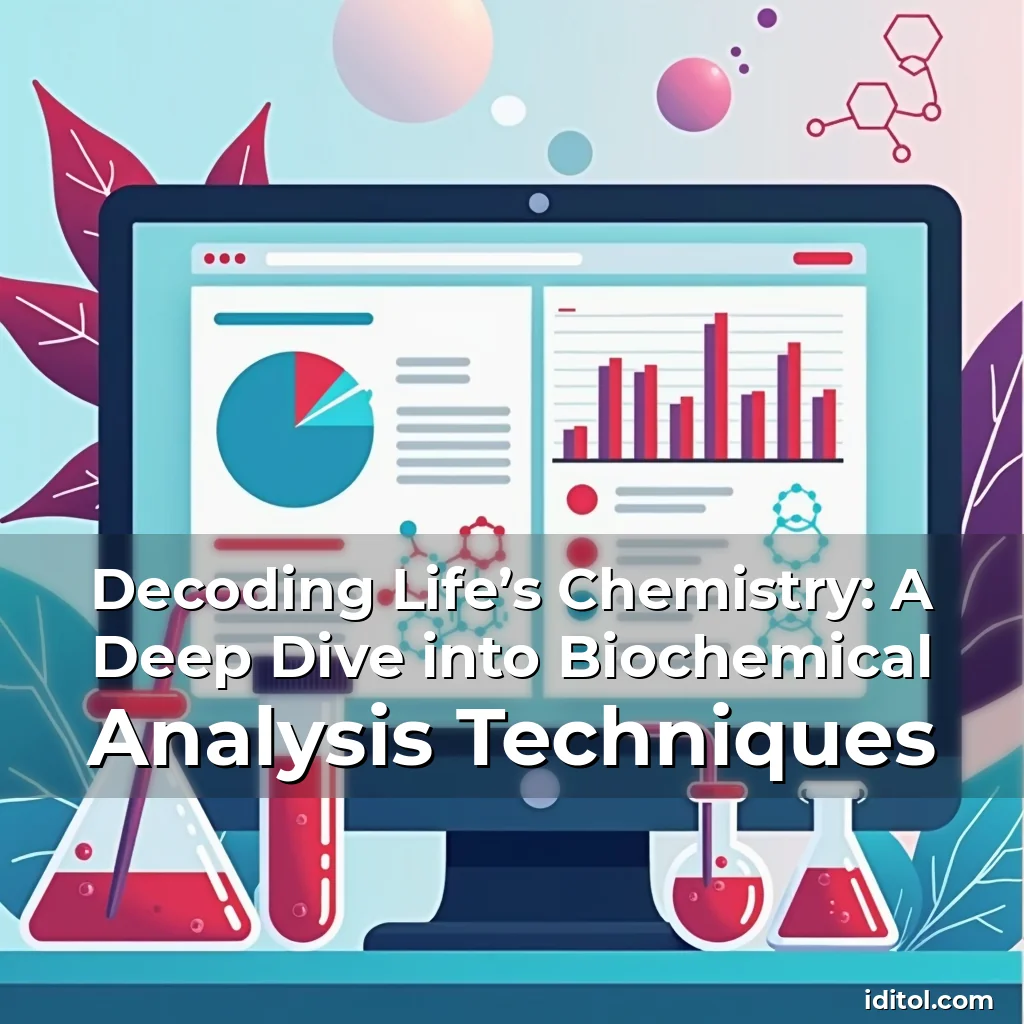
Decoding Life’s Chemistry: A Deep Dive into Biochemical Analysis Techniques
Biochemical analysis serves as the bridge connecting molecular biology with practical applications in medicine, agriculture, environmental science, and biotechnology. By examining chemical processes at the cellular level, scientists uncover how organisms function, respond to stimuli, and interact with their environments.
This exploration delves beyond basic definitions to reveal advanced methodologies, real-world case studies, and emerging technologies shaping modern biochemical research. Whether diagnosing diseases or engineering new materials, biochemical analysis remains foundational to scientific progress.
The Science Behind Molecular Investigation
Biochemical analysis focuses on identifying, quantifying, and characterizing biological molecules such as proteins, nucleic acids, lipids, and carbohydrates. These investigations often require isolating compounds from complex mixtures found in living systems.
Scientists employ precise analytical techniques to measure concentrations, detect interactions, and determine structural properties. This enables them to study metabolic pathways, enzyme kinetics, and signaling mechanisms essential for life processes.
- Molecular identification: Techniques like mass spectrometry and NMR spectroscopy allow researchers to pinpoint exact molecular structures present in samples.
- Quantitative measurement: Enzymatic assays and ELISA tests provide accurate measurements of biomolecule quantities, crucial for diagnostic applications.
Core Applications Across Scientific Fields
Medical professionals rely heavily on biochemical analysis for disease diagnosis through blood tests, urine analysis, and tissue sampling. These assessments reveal imbalances in metabolites or abnormal protein expression indicative of various conditions.
In agricultural sciences, biochemical profiling helps breeders develop crops with enhanced nutritional value or resistance to pests. Soil analyses also guide sustainable farming practices by measuring nutrient availability and microbial activity levels.
Environmental Monitoring Through Chemical Profiling
Water quality testing utilizes biochemical markers to assess pollution levels. Parameters like dissolved oxygen concentration, pH balance, and heavy metal presence inform ecological health assessments.
Microbial communities in water sources serve as natural indicators of contamination risks. Their metabolic profiles can predict potential hazards long before traditional detection methods identify pollutants.
Advanced Analytical Tools and Technologies
Modern laboratories utilize high-throughput screening platforms capable of analyzing thousands of samples simultaneously. These automated systems accelerate drug discovery and personalized medical treatments based on individual genetic profiles.
Cutting-edge instrumentation such as tandem mass spectrometers provides unprecedented resolution in detecting trace amounts of substances. This capability proves vital in forensic science and pharmaceutical development where minute variations matter significantly.
Single-Molecule Detection Revolutionizes Research
Recent advances enable direct observation of single-molecule behaviors previously unobservable due to limitations in conventional equipment sensitivity. This breakthrough allows scientists to track biochemical reactions in real-time at the atomic scale.
Techniques like optical tweezers manipulate individual molecules to study mechanical forces involved in cellular processes. Such precision opens new avenues for understanding fundamental biological phenomena.
Challenges and Limitations in Modern Practice
Despite technological advancements, sample preparation remains a significant bottleneck affecting data accuracy. Contamination risks during handling procedures can compromise results even with sophisticated analytical instruments.
Variability between biological specimens introduces complexity in interpreting findings. Genetic differences among individuals necessitate careful calibration of reference standards across diverse populations.
Ethical Considerations in Human Sample Studies
Research involving human subjects demands strict adherence to ethical guidelines regarding informed consent and privacy protection. Proper anonymization protocols prevent misuse of sensitive biomedical information.
Regulatory frameworks govern permissible uses of genetic material obtained from patients. Compliance with international standards ensures responsible conduct in clinical research settings.
Futuristic Directions in Biomedical Innovation
Nanotechnology integration promises transformative changes in biochemical sensing capabilities. Nano-biosensors offer rapid, portable solutions for on-site diagnostics without requiring centralized laboratory facilities.
Synthetic biology approaches now permit engineering custom biosystems capable of performing targeted biochemical tasks. These innovations could revolutionize areas ranging from renewable energy production to waste management strategies.
Artificial Intelligence Enhances Data Interpretation
Machine learning algorithms process vast datasets generated by biochemical experiments far faster than manual analysis ever could. Pattern recognition software identifies correlations between variables that might otherwise remain undetected.
Predictive models built using AI assist in designing optimal experimental parameters ahead of time. This proactive approach reduces resource consumption while increasing chances of successful outcomes.
Case Study: Advancing Cancer Diagnostics Through Biochemical Profiling
A groundbreaking application lies in cancer early detection via circulating tumor DNA analysis. Researchers isolate free-floating genetic fragments released by malignant cells into bloodstream circulation for non-invasive screening purposes.
Comparative genomic hybridization techniques analyze copy number variations associated with oncogenic mutations. Early identification enables timely intervention improving patient prognoses substantially.
Personalized Medicine Based on Metabolic Signatures
Metabolomics profiling reveals distinct biochemical fingerprints characteristic of different cancers types. These signatures guide treatment selection matching therapies to specific molecular alterations observed in tumors.
Pharmacometabonomics combines pharmacological principles with metabolic analysis to optimize drug dosages according to individual patient responses. This customized approach minimizes adverse effects while maximizing therapeutic efficacy.
Educational Pathways for Aspiring Professionals
Students pursuing careers in biochemical analysis typically complete undergraduate degrees in chemistry, biology, or related fields followed by specialized graduate training programs focused on analytical techniques.
Laboratory experience through internships or research assistant positions provides hands-on familiarity with instrumentation operation and data interpretation methodologies essential for professional practice.
Continuing Education Opportunities
Professional organizations offer certification courses covering emerging technologies relevant to current industry standards. Workshops on next-generation sequencing platforms ensure practitioners stay updated with evolving methodologies.
Online resources provide flexible learning options for those seeking to acquire new skills independently outside formal academic institutions. Virtual labs simulate realistic scenarios helping reinforce theoretical knowledge through practical exercises.
Conclusion
Biochemical analysis continues to evolve rapidly driven by interdisciplinary collaborations spanning multiple scientific domains. Its impact extends well beyond pure research into everyday healthcare delivery and environmental stewardship initiatives worldwide.
As technology progresses, maintaining rigorous methodological standards becomes increasingly important. Staying informed about regulatory updates and participating in continuous education ensures practitioners contribute effectively to advancing this dynamic field responsibly.